What is Lung Oscillometry?
Lung oscillometry, also known as Impulse Oscillometry (IOS) or the Forced Oscillation Technique (FOT), is a modern, non-invasive test used to assess lung function. It measures how air flows through your lungs using gentle sound waves. Unlike spirometry, it does not require forceful breathing in or out—just calm, normal breathing.
How Does This Test Work?
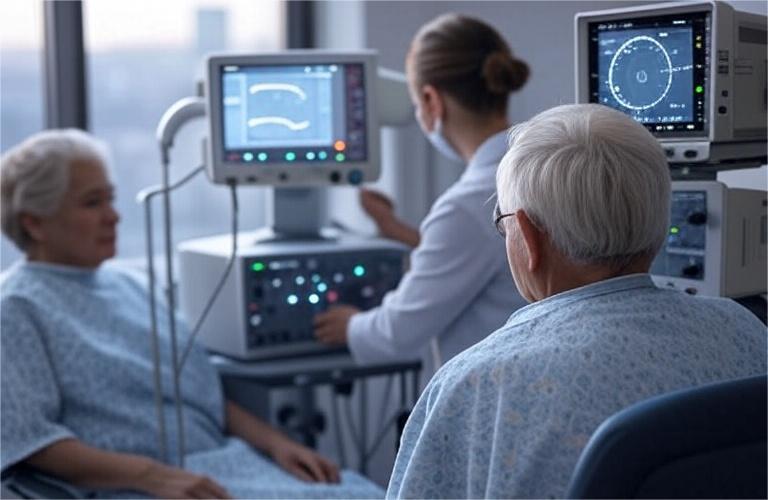
During the test, gentle sound waves of varying frequencies (from 5 to 30 Hz) are sent into your lungs through a small speaker attached to a mouthpiece. As these waves travel through your airways, they measure two key things:
Resistance (R): The blockage or difficulty in airflow through the airways.
Reactance (X): The elasticity or flexibility of your lungs.
Low-frequency waves (e.g., 5 Hz) can reach deep into the small airways, while high-frequency waves (e.g., 20 Hz) are mostly limited to larger airways. As a result, this test can easily detect small airway problems that are often missed by standard spirometry.
Why is Oscillometry Important?
Early Disease Detection
The biggest advantage of oscillometry is its ability to detect airway problems at a very early stage—even before symptoms appear. Traditional spirometry often fails to detect small airway disease unless up to 75% of the airway is already damaged. Oscillometry, however, can catch it much earlier.
Assessment of Small Airways
- Small airways (less than 2 mm in diameter) are known as the “silent zone” of the lungs because problems here rarely show symptoms until the disease is severe. Oscillometry can detect small airway issues clearly and quickly, helping to:
- Start treatment before the disease progresses
- Better manage conditions like asthma or COPD
- Prevent complications in lung health
- High Sensitivity
- Studies show oscillometry is more sensitive than spirometry when it comes to:
- Detecting early-stage COPD
- Identifying small airway involvement in asthma
- Evaluating bronchodilator response
Advantages Over Spirometry
- Easier and More Comfortable for Patients
- Low Effort: Only normal breathing is required—no forceful blowing.
- Suitable for All Ages: Children, elderly, and those unable to perform spirometry can easily do this test.
Less Discomfort: Reduced risk of coughing, breathlessness, or fatigue.
No Deep Breathing Needed: Regular breathing is enough.
Detailed and Accurate Data
- Can differentiate between large and small airway problems
- Clarifies the nature and location of the disease
- Helps monitor disease progression and treatment response
How is the Test Performed?
- Preparation
- Avoid short-acting bronchodilators for 4 hours before the test.
- Wear loose-fitting clothing.
- Remove dentures, if any, to fit the mouthpiece properly.
- Avoid heavy meals before the test.
During the Test
- Sit upright with your head straight or slightly raised.
- A nose clip will be applied so all breathing is through the mouth.
- Place the mouthpiece in your mouth and breathe normally.
- Hold your cheeks with your hands to prevent air leakage.
- Breathe normally for 30–45 seconds.
- The test is usually done three times.
What Will You Feel?
- A mild vibration or “fluttering” in your mouth and chest.
- No pain or discomfort.
- Completely safe and non-invasive.
- Understanding the Results
Key Parameters
R5: Total airway resistance (large + small airways)
R20: Resistance in large airways
R5-R20: Resistance in small airways
X5: Lung elasticity/reactance
AX: Overall reactance area
What Do Abnormal Results Mean?
Increased resistance: Narrowed or blocked airways (as in asthma, COPD, etc.)
Abnormal reactance: Decreased lung elasticity or small airway obstruction
Safety and Precautions
Safe: No forceful breathing required, no side effects.
Precautions: Avoid the test if you have a fever, severe cough, recent oral surgery, or are unable to use the mouthpiece properly.
Why Choose Breathe and Believe Chest Care Clinic for Oscillometry?
- Modern and accurate technology
- Expert analysis of test results
- Focus on patient comfort and safety
- Early detection and ongoing monitoring of lung diseases
Conclusion
Lung oscillometry testing is a revolutionary tool in respiratory disease diagnosis. This simple, comfortable, and accurate test helps you and your family maintain better lung health.
If you have persistent cough, shortness of breath, asthma, or are at risk for lung disease, visit our clinic and get an oscillometry test done today. Early diagnosis leads to more effective treatment.
For more information or appointments, contact:
Breathe and Believe Chest Care Clinic, Barasat
Dr. Samarjit Das and his team are always here for you.